
Michael Akampa has spent his career navigating between two distinct worlds — emerging markets in Africa and highly structured innovation ecosystems in the Nordics. As a founder, investor, and ecosystem builder, he works at the intersection of finance, technology, and impact, helping companies and capital flow across borders. We talked about his journey, what he’s building with Nobon, and why bridging ecosystems matters more than ever.
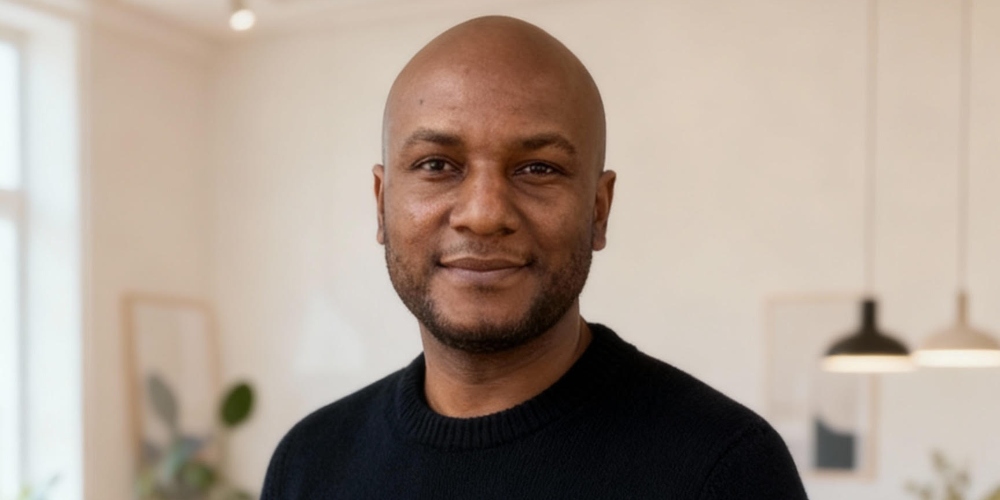
- Michael, thank you for joining us. Could you start by telling us about your background and how you first became involved in the startup world?
I grew up in Uganda in a family and community where entrepreneurship wasn’t a buzzword — it was a necessity. People started small businesses not because it was trendy, but because it was how you survived. From an early age, I learned that talent, creativity, and resilience exist everywhere, even when resources don’t.
Later in life, I moved to Sweden, which gave me a completely different vantage point. Suddenly, I found myself in a society where systems function effectively, capital is readily accessible, and innovation is supported by robust institutions. Seeing these two worlds side by side shaped my worldview deeply. It made me very aware that opportunity is often less about talent and more about the environment around you.
Professionally, I started my career in banking and investment, working with institutions such as Barclays, Commercial Bank of Africa, and Housing Finance Bank. At Housing Finance Bank, I was involved in deploying long-term financing from the European Investment Bank through the Private Enterprise Finance Facility. The goal was to support SMEs across sectors like agro-industry, manufacturing, construction, healthcare, education, and tourism — the backbone of the economy.
That experience gave me a front-row seat to the real challenges entrepreneurs face. Time and again, I saw capable founders with strong demand and solid ideas struggle not because they lacked ambition, but because the ecosystem around them lacked infrastructure, capital pathways, and long-term support. The ideas were there; the scaffolding wasn’t.
My entry into startups happened almost unintentionally. Co-founding RE Equity wasn’t part of a master plan — it was about solving a real housing and financing gap using a model that blended private capital with sustainable development. Watching that company scale and continue growing beyond its early milestones showed me what’s possible when you build the right foundations early.
That journey eventually led me to co-found Ultiro, where I’ve been able to build companies across the Nordics and Africa and support founders with market entry, fundraising, and growth. My connection to startups grew organically from solving real problems in real markets — and it’s stayed with me ever since.
- You’re the Co-Founder of Nobon, a platform using blockchain and AI to streamline alternative investments in emerging markets. What problem are you solving?
Nobon was born out of a very personal frustration. For years, I worked closely with project developers across Africa — in climate, agriculture, renewable energy, and nature-based solutions. These were high-impact projects transforming communities, yet they struggled to secure funding. Not because they lacked scale or credibility, but because the investment process was fragmented, opaque, and heavily relationship-driven.
At the same time, in Europe and the Nordics, I kept meeting investors actively looking for high-quality climate and impact investments — but unable to find projects they could truly trust.
So the issue wasn’t a lack of capital or a lack of projects. It was the lack of a bridge.
Nobon exists to build that bridge in a modern, digital, and transparent way. We use structured data, blockchain, and AI to standardize the entire journey — from project design to funding and ongoing monitoring. Instead of spending months chasing investors, developers can present verifiable, auditable data in formats investors already understand. And investors gain clarity, trust, and faster capital deployment.
But the mission goes beyond efficiency. It’s about access.
Many developers in emerging markets are excluded from global finance simply because the system wasn’t designed for them. We want to level that playing field — so a solar mini-grid developer in Uganda or a rangeland restoration project in Namibia can raise capital with the same sophistication and credibility as a developer in Europe.
If we can do that at scale, we unlock billions for climate and nature projects that genuinely improve lives.
- You’re also an investor and board member at PAYTOTA and PayTack. What draws you to entrepreneurship and startup investing?
Entrepreneurship is about building things that don’t exist yet. Investing allows you to back the people brave enough to do exactly that.
I’m particularly drawn to founders solving real, structural problems — whether that’s payments infrastructure, SME loyalty systems, or financial inclusion. Startups have speed, creativity, and willingness to experiment that large institutions simply don’t.
With Paytota and Paytack, I saw teams deeply committed to reshaping how the digital economy works in Africa and other emerging markets. As an investor and board member, I can contribute strategic guidance, open doors to Nordic networks, and help bridge ecosystems that rarely interact but are highly complementary.
- How would you compare the startup ecosystems in the Nordics and Africa?
They’re very different — but also surprisingly complementary.
In the Nordics, ecosystems are well-organized, transparent, and efficient. There’s strong public-sector support, good access to innovation funding, and a highly experienced talent pool, especially in tech, sustainability, fintech, and design. The main challenge is market size — companies need to think globally very early.
In Africa, the energy is incredible. There’s a young, fast-growing population and massive opportunities in payments, energy, logistics, agriculture, and climate adaptation. The challenges are structural: fragmented regulation, limited capital, and longer deal cycles.
Where it gets exciting is where these ecosystems meet.
Nordic structure, capital, and technology combined with African scale, demographics, and real-world problems create powerful opportunities. Much of my work has focused on building that bridge — helping Nordic companies enter African markets and helping African innovators access Nordic expertise, networks, and investment.
- Finally, what are the three most important lessons you’d share with startup founders?
First: build something people truly want — and keep it simple. Founders often overbuild. The best companies obsess over the customer, validate early, and focus relentlessly on real value.
Second: treat fundraising as a full-time function. It requires preparation, clean data, discipline, and a clear narrative. Investors respond to founders who are organized and ready — not just passionate.
Third: surround yourself with the right people. Your co-founders, early hires, and advisors shape everything. Choose integrity, resilience, and alignment over raw intelligence.
And above all, stay adaptable. Markets change, technologies evolve, and your company has to evolve with them.
Thank you very much for sharing your story and insights with us. We wish you the best of luck in your future endeavours.
Join our network of startups and investors!

 Log in with Linkedin