
Six out of ten children who need early behavioral support never receive it in time, largely due to a strained healthcare infrastructure that forces families into year-long waiting lines. GameAnalyze is looking to disrupt this landscape with Tweexy—a gamified, AI-powered wellbeing app that delivers immediate behavioral reports to parents based on peer-reviewed science.
Boasting early organic traction across 20 countries and collaborative research with Leiden University, the startup is currently opening doors to angel investors via a live round on Leapfunder. In this interview, Co-Founder Dmitry outlines the company’s growth strategy and why early-stage intervention is the next frontier in the $20 billion digital health market.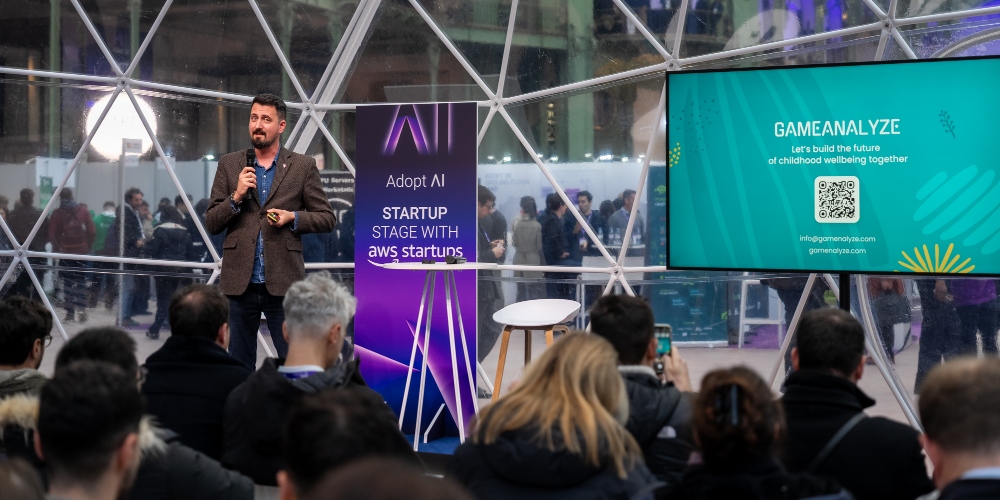
- Hi Dmitry. Thank you for agreeing to do the interview. Tell us about GameAnalyze and the idea that got it all started.
It started in a meeting room. Three of us were meant to be talking about work – we used to work together back then. And somehow the conversation slipped into childhood. School. All that chaos that never leaves your life, misunderstandings with parents.
One story led to another. Each of us had grown up carrying something we couldn’t figure out. It turned out to be undiagnosed ADHD. By the time we each found out, years had already passed.
We were not looking to build a startup. We were just realising we had lived the same story, and asking the same question: why does it take so long for a child to be understood?
That question became GameAnalyze. We built Tweexy, a mobile wellbeing app where a child plays a game for 15 minutes, and parents receive an immediate behavioral insights report. They don’t have to Google or talk to ChatGPT anymore. It’s just a fun game, and the replies for the parents that used to take 12-18 months to arrive.
- What problems are you trying to solve? What are the benefits of GameAnalyze?
The problem is simple but brutal.
Six out of ten children who need early behavioral support never get it in time. The average wait for a professional assessment in Europe is 6 to 18 months. During that time, parents are left guessing, children keep struggling, and the window for early support closes.
Existing tools make it worse. They require clinical settings, professional administration, and a child who can sit still in an unfamiliar room for 45 minutes. The result is a single snapshot that may not reflect how a child actually behaves at home, at school, or across different times of day.
Our app, Tweexy, captures behavioral data in the child’s natural environment through a game they enjoy, across multiple sessions over time. Parents get a clear report covering focus, attention, reaction time, and impulse patterns. It is grounded in peer-reviewed science and validated across 350+ children after our research. We are adding data now through research with Leiden University.
We are not a medical device; we don’t treat or diagnose. We are giving families the early insight layer that currently does not exist. Something real to act on while the system catches up (surprise: it won’t).
Our work is rooted in the methodology based on 70+ peer-reviewed studies. Our research adds to the theory as we speak.
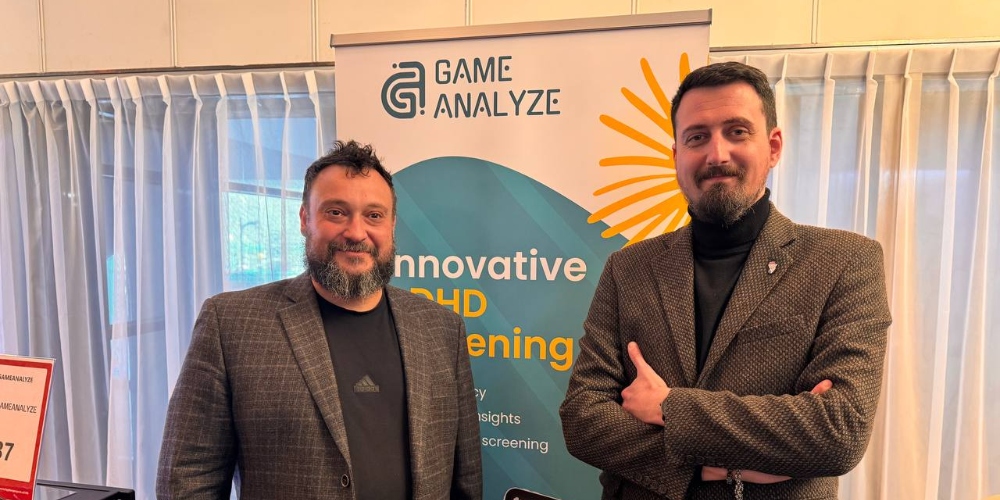
- You have a live round on Leapfunder. What makes it the right tool for your startup, and what do you expect from the round?
It feels like Leapfunder fits where we are right now.
We are post-product, post-revenue, pre-Series A. We have traction: 170+ installs, 13 paying clients, 9.6% organic conversion, 20+ countries. But we are not yet at the stage where traditional VCs move fast. Leapfunder lets us connect with angel investors who understand early stage, move quickly, and care about the mission behind the product.
In our current round, early investors also get founding investor status and lifetime Tweexy access.
What we expect from the round is not just capital. It is the right people around the table. Investors who have relevant networks in digital health, healthcare organisations, or parenting communities are as valuable as the money itself at this stage.
- How much growth potential do you see for GameAnalyze?
Everyone wants to say they have the best product in the world, but the honest answer is: it really is significant, and we are being conservative about it deliberately.
The global digital behavioral health market is projected to reach $20 billion by 2033. Child behavioral wellbeing is one of the most underserved segments within it. Most tools start at age 7 or older. We start at 4. No one is doing what we are doing at this age range, in this format, with this level of science.
The B2C model scales with paid acquisition. We are already converting at 9.6% organically. The upside is significant. And we haven’t even launched our first campaign yet.
Beyond B2C, the B2B pipeline is building – 3 letters of intent from healthcare organisations already signed. The platform is designed to expand beyond children to adolescents, adults, and workplace wellness over time.
We are not trying to be everything at once. We are building the foundation step by step, so the growth that follows is sustainable.
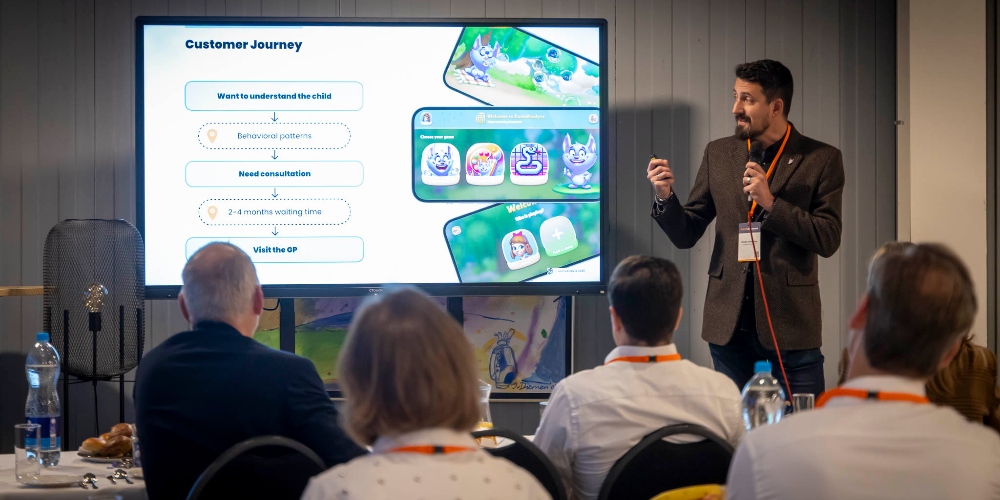
- What are your plans for the upcoming months? Tell us about your go-to-market strategy and the plan to acquire customers.
The next three months are about proving the paid acquisition thesis.
Right now, everything is organic. 170+ installs, 13 paying clients, 20 countries – zero ad spend. The signal is clear. The product converts. We just need reach.
With the raise, we deploy part of it into paid acquisition over 6 months – Meta and Google targeting parents aged 25 to 45 with children aged 4 to 12. Conservative projection: 24,000 installs, 480 paying users. Base case: 40,000 installs, 1,160 paying users, €136K in revenue.
Alongside paid, we are building B2B momentum. Conversations are active with healthcare organisations, schools, and two insurance companies. Three letters of intent have already been signed, as I have mentioned, and these convert to contracts as we scale.
On the research side, clinical studies are ongoing with Leiden University and the University of Twente. Model accuracy is improving.
People say summer is the low season, but we have several events coming up: for example, at the Leiden Bio Science Park Open Day on July 4th, where children can play Tweexy live, and parents receive real behavioral insights on the spot.
The strategy is simple. Build the evidence. Scale what is already converting. And keep showing up.
We simply want to let as many children as possible play a simple game and spot the hurdles in only 15 minutes.
Thank you for sharing your story with us. We wish GameAnalyze the best of luck.
Join our network of startups & investors!

 Log in with Linkedin